

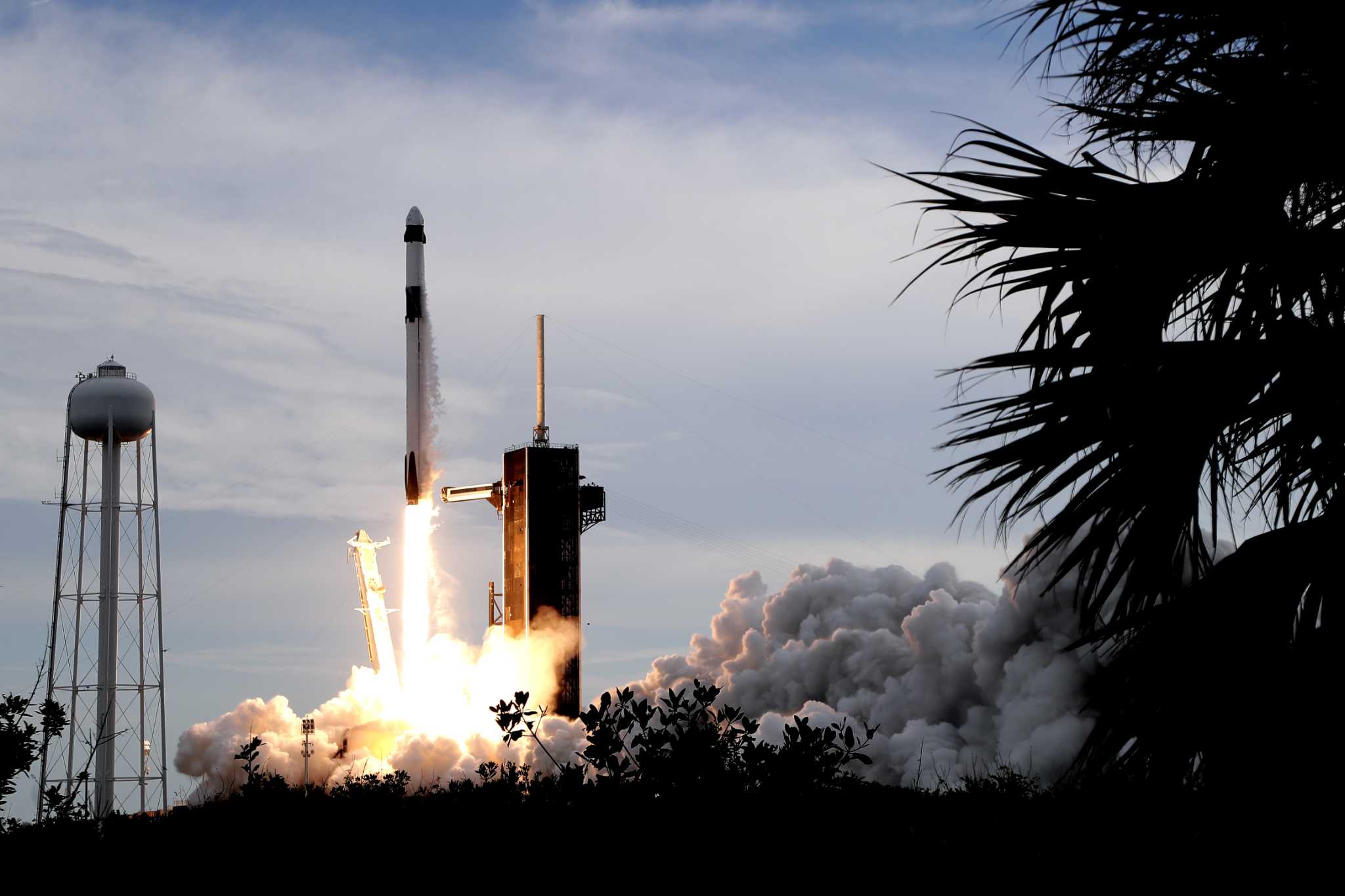
On May 22, 2023, Axiom Space launched its second-ever private mission to the International Space Station (ISS) from the Kennedy Space Center in Cape Canaveral, Florida. The mission, called Axiom Mission 2 (Ax-2), carried the first two Saudi astronauts to travel to the orbiting laboratory. Rayyanah Barnawi, a breast cancer researcher, became the first Saudi woman to voyage into space, and Ali Al-Qarni, a fighter pilot, joined her on the mission. The crew took off aboard a SpaceX Falcon 9 rocket and is due to spend around ten days on board the ISS. Peggy Whitson, a former NASA astronaut, who will be making her fourth flight to the ISS, and John Shoffner, a businessman from Tennessee, who is piloting, are also part of the crew. The team is set to carry out about 20 experiments while on the ISS, including studying the behavior of stem cells in zero gravity.
The mission is not Saudi Arabia’s first foray into space. In 1985, Prince Sultan bin Salman bin Abdulaziz, an air force pilot, took part in a US-organized space voyage. The oil-rich Gulf kingdom established the Saudi Space Commission in 2018 and launched a program last year to send astronauts into space. Scores of flag-waving Saudis gathered at the launch party in Riyadh beneath a massive white tent for the blast-off countdown.
The space mission involving a Saudi woman is the latest move by the country to revamp its ultraconservative image. The country established the Saudi Space Commission in 2018 and launched a program last year to send astronauts into space. The four-member team is set to carry out about 20 experiments while on the ISS.
Ax-2 is the second Axiom Space mission in partnership with ISS keyholder NASA. The private space company offers the voyages for sums that run into the millions of dollars. Axiom Space also oversees training for the astronauts, charters their means of transport, and manages their stay in space. The company carried out its first private mission to the ISS in April 2022, sending three businessmen and former astronaut Michael Lopez-Alegria into orbit for 17 days as part of Ax-1.
For Axiom Space, these missions are a first step toward an ambitious goal: the construction of its own space station, with the first module expected to launch in 2025. The station would first be attached to the ISS before separating and orbiting independently. NASA plans to retire the ISS around 2030 and to instead send astronauts to private stations, which will also host their own clients, leading the US space agency to encourage the development of programs by several companies. Russia recently agreed to extend its use of the ISS until 2028, having threatened an earlier pullout last year as ties unraveled between the Kremlin and the West over Moscow’s invasion of Ukraine.


