

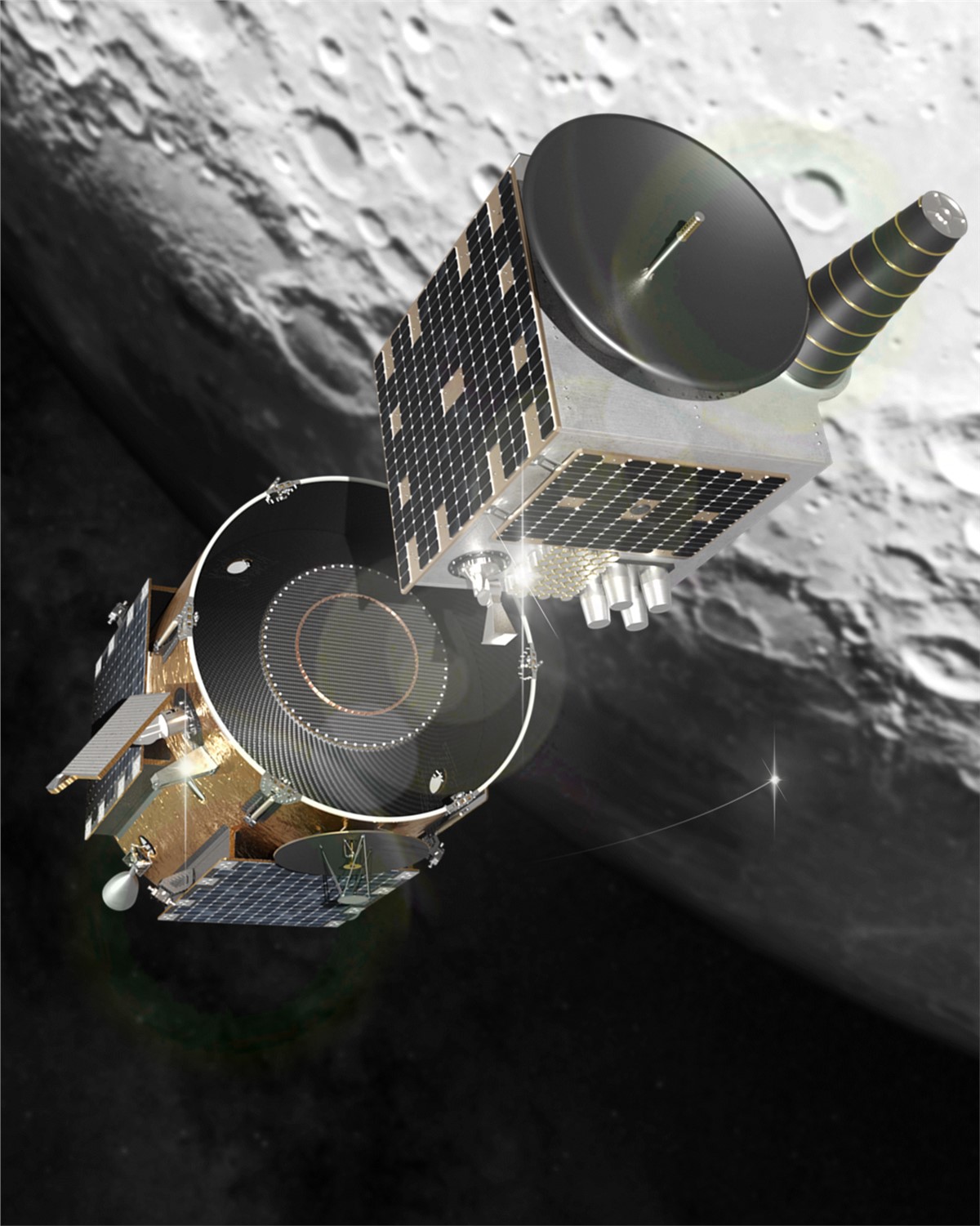
NASA has chosen Firefly Aerospace of Cedar Park, Texas to carry multiple payloads to the far side of the Moon, including a satellite to orbit the area. The commercial lander will deliver two agency payloads, as well as a communication and data relay satellite for lunar orbit, which is a collaboration between the European Space Agency (ESA) and NASA. The contract award is just under $112 million and is part of NASA’s Commercial Lunar Payload Services (CLPS) initiative and the Artemis program.
The landing site on the far side of the Moon is considered one of the best locations in the solar system for making radio observations shielded from the noise generated by Earth. The sensitive observations need to take place during the fourteen earth-day long lunar night. One of these payloads aims to make low-frequency astrophysics measurements of the cosmos during the “Dark Ages,” a cosmic era that began some 370,000 years after the Big Bang and lasted until the first stars and galaxies formed.
Firefly is responsible for end-to-end delivery services, including payload integration, delivery from Earth to the surface and orbit of the Moon, and NASA payload operations for the first lunar day. This is the second award to Firefly under the CLPS initiative.
“We look forward to Firefly providing this CLPS delivery,” said Joel Kearns, the deputy associate administrator for exploration in NASA’s Science Mission Directorate. “This lunar landing should enable new scientific discoveries from the far side of the Moon during the lunar night. This particular group of payloads should not only generate new science but should be a pathfinder for future investigations exploiting this unique vantage point in our solar system.”
The three payloads slated for delivery are expected to weigh about 1,090 pounds (494.5 kilograms) in total. These payloads include Lunar Surface Electromagnetics Experiment-Night (LuSEE-Night), a pathfinder to understand the Moon’s radio environment and to potentially take a first look at a previously unobserved era in our cosmic history. The other two payloads are Lunar Pathfinder, a communications and data relay satellite, and User Terminal (UT), which will institute a new standard for S-Band Proximity-1 space communication protocol and establish space heritage.
Commercial deliveries to the lunar surface with several providers continue to be part of NASA’s exploration efforts. Future CLPS deliveries could include more science experiments and technology demonstrations that further support the agency’s Artemis program.




 Copyright 2023 All rights reserved.