

The moon has been a subject of exploration since the 1950s, when the Soviet Union and the United States were in a race to achieve “the first” in every sphere of selenology. The US became the first country to land a man on the lunar surface, which ended the “moon race”. Since then, no astronaut has landed on the moon for more than half a century. However, the second tide of lunar explorations began in the 1990s, with countries like Japan, European states, China, and India sending probes to the moon. Unlike the previous moon race, this time, the purpose of lunar explorations is to achieve scientific and engineering goals.
Countries capable of space exploration pay more attention to efficiency. Water has been found in permanent shadow areas of the moon, and scientists are hopeful that on-site resource utilization technologies will help reduce the cost of lunar exploration. In regions near the “south pole” of the moon, scientists expect to find a large amount of water ice in permanent shadow areas. There are also long-duration sunlit areas near the “south pole”, and scientists say human beings can set up permanent bases there, which will transform the exploration of the moon to exploitation of the moon.
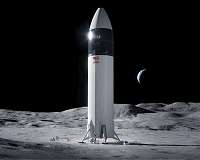
The US has said its Artemis program will use Orion spaceship and the space-launch system to carry astronauts to cislunar space. They will also build a cislunar space station called the “gateway”. The US National Aeronautical and Space Administration has chosen SpaceX’s starship for the manned human landing system with Blue Origin solution as a backup measure. The Artemis program is paying greater attention to reliability and safety. But the program seems starved of funds, and that’s the reason why it is challenging for the US to return to the moon.
During the news conference to mark the launch of the Shenzhou-16 manned flight mission recently, the China Manned Space Agency formally announced that it will send the first Chinese astronaut to the moon before 2030. China has made all the preparations, and the launch vehicle to be used for China’s manned lunar program is called “Long March-10”, which is a new generation human-rated launch vehicle. China will use the new-generation manned spaceship to send astronauts into lunar orbit. To make it possible for a Chinese national to walk on the moon, China will develop a new spacecraft called the “Lunar Lander”, which will be propelled into lunar orbit by Long March-10, and dock with the new spaceship in lunar orbit.
China will not join any moon race but will advance its space technology and high-tech industry. Rather than competing with any other country, China is open to engaging in cooperation with other countries, because it knows such cooperation is important for becoming a leading country in the field of space science. China has already engaged in high-level international cooperation on its robotic lunar and space station programs and is confident it will engage in cooperation with more countries on its manned lunar program.


