

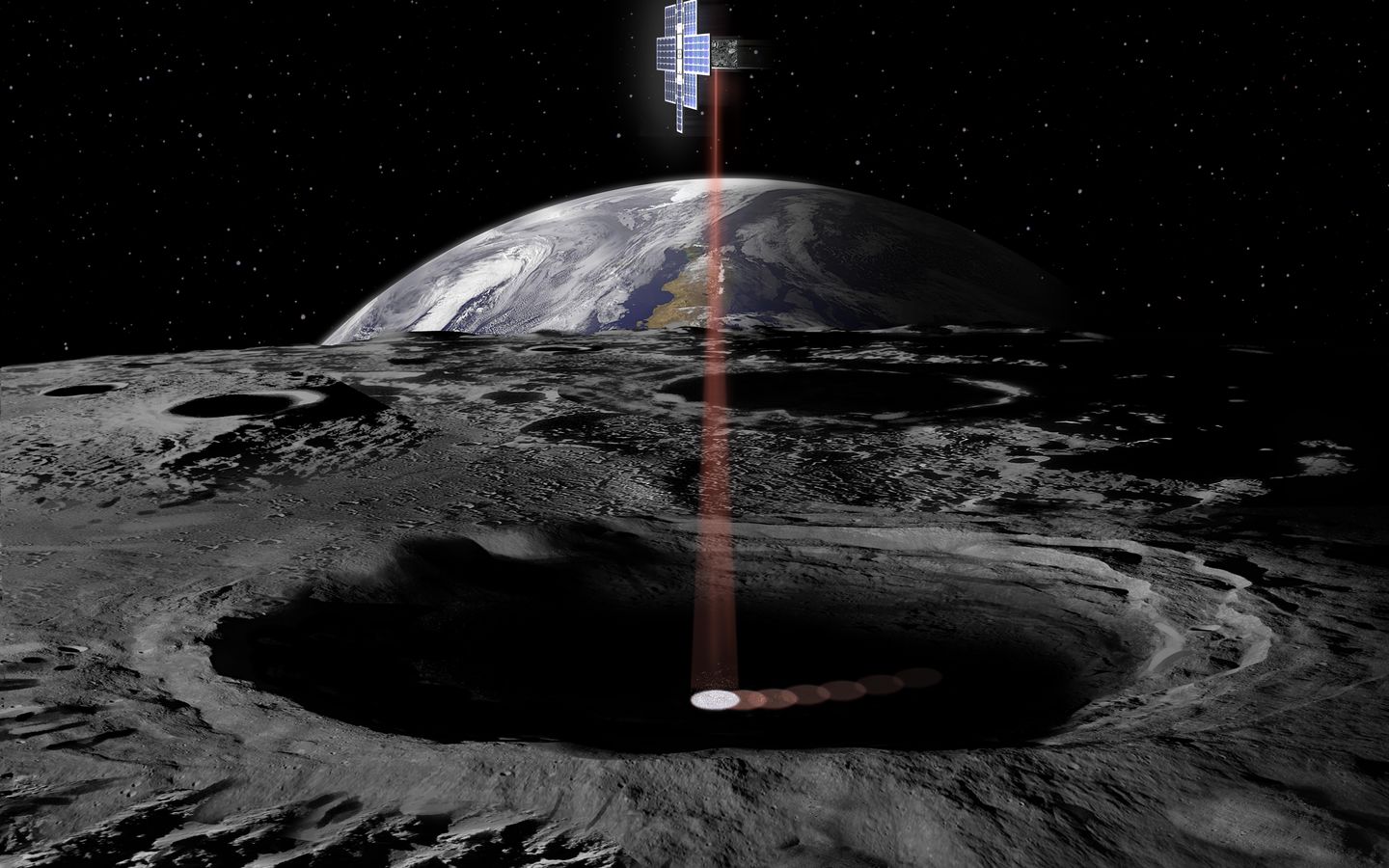
NASA has ended its Lunar Flashlight mission after the CubeSat failed to reach the lunar South Pole to help seek ice. However, the briefcase-size satellite fulfilled several technology goals that will empower future missions for the benefit of humanity. The mission launched on Dec. 11, 2022, to demonstrate several new technologies, with an ultimate goal to seek out surface ice in the permanently shadowed craters of the Moon’s South Pole. Although the propulsion system was unable to produce the desired thrust, newly developed propulsion system components exceeded performance expectations. Lunar Flashlight’s never-before-flown Sphinx flight computer and upgraded Iris radio also surpassed expectations. The mission’s miniaturized four-laser reflectometer, a science instrument that had never flown before, either, also tested successfully, giving the mission’s science team confidence that the laser would have been able to detect ice if it were present at the lunar surface. Despite the mission’s technological wins, Lunar Flashlight’s miniaturized propulsion system struggled to provide sufficient thrust to put the CubeSat on course for the planned near-rectilinear halo orbit that would have given the spacecraft weekly flybys of the Moon’s South Pole. The team suspects that debris obstructed the fuel lines, causing the diminished and inconsistent thrust. The operations team calculated a new orbit that could be reached using the spacecraft’s small amount of potential remaining thrust. The plan called for putting the CubeSat on a path that would place it in orbit around Earth rather than the Moon, with monthly flybys of the lunar South Pole. With the mission running out of time to arrive at the needed orbit, the operations team tried to dislodge any debris from the fuel lines by increasing the fuel pressure well beyond the propulsion system’s designed capacity. Despite limited success, the required trajectory correction maneuvers couldn’t be completed in time. After having traveled out past the Moon, Lunar Flashlight is now moving back toward Earth and will fly past our planet with a close approach of about 40,000 miles (65,000 kilometers) on May 17. The CubeSat will then continue into deep space and orbit the Sun.


