

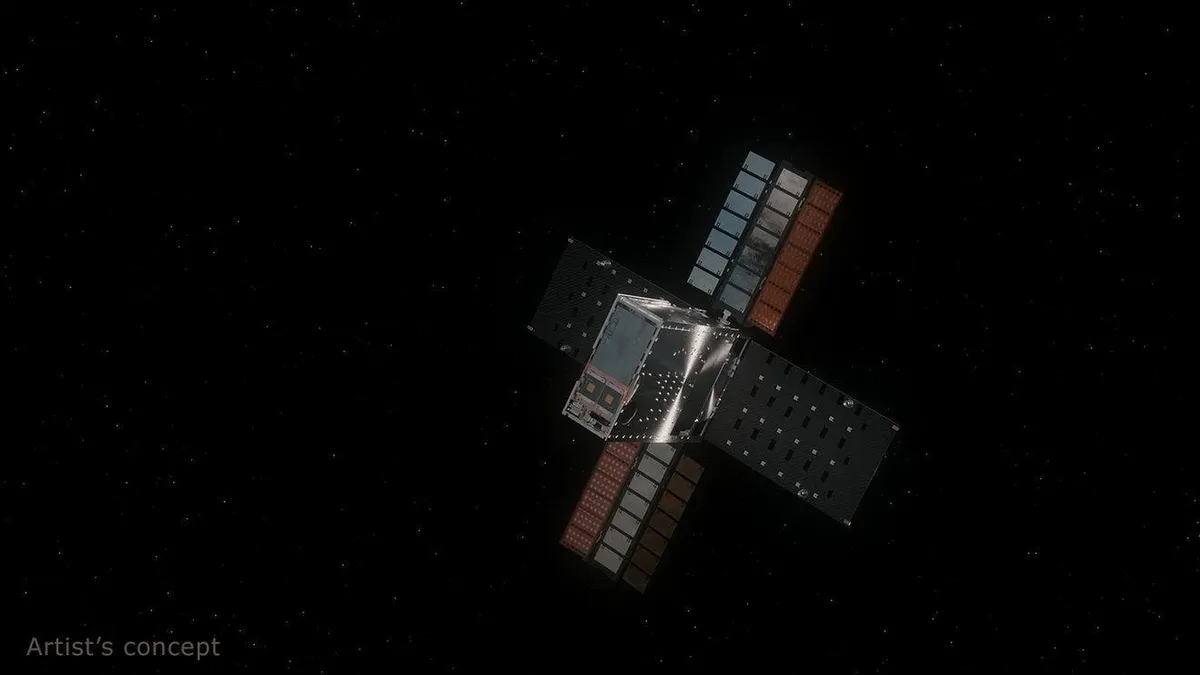
The NASA team responsible for the Lunar Flashlight mission is still working to fix the CubeSat’s propulsion system, which is currently underperforming. The team has developed a new method to increase the thrust of one of the four thrusters, but the spacecraft will require more consistent thrust in the coming days to reach its revised target orbit. The new method was developed by team members at NASA’s Jet Propulsion Laboratory, Georgia Tech, and the agency’s Marshall Space Flight Center. It involves increasing fuel pump pressure beyond the system’s operational limit while opening and closing the system’s valves to clear suspected obstructions in the thruster fuel lines. After some success with one thruster, the team is now attempting this method on the other three thrusters, which have produced limited success so far.
The CubeSat is currently beyond the Moon’s orbit, more than half a million miles from Earth, and is looping back towards our planet. The team needs to nudge Lunar Flashlight into a trajectory that will allow it to carry out monthly flybys of the lunar South Pole to look for surface ice inside permanently shadowed craters. To achieve this goal, they need more reliable thrust for the next few days.
The propulsion system on Lunar Flashlight is a technology demonstration that has never been flown in space before. Technology demonstrations are high-risk, high-reward endeavors intended to push the frontiers of space technology. The lessons learned from these challenges will help to inform future missions that advance this technology.
Lunar Flashlight is funded by the Small Spacecraft Technology program based at NASA’s Ames Research Center in Silicon Valley and within NASA’s Space Technology Mission Directorate. Despite the propulsion system issues, all other systems aboard Lunar Flashlight are performing well.


