

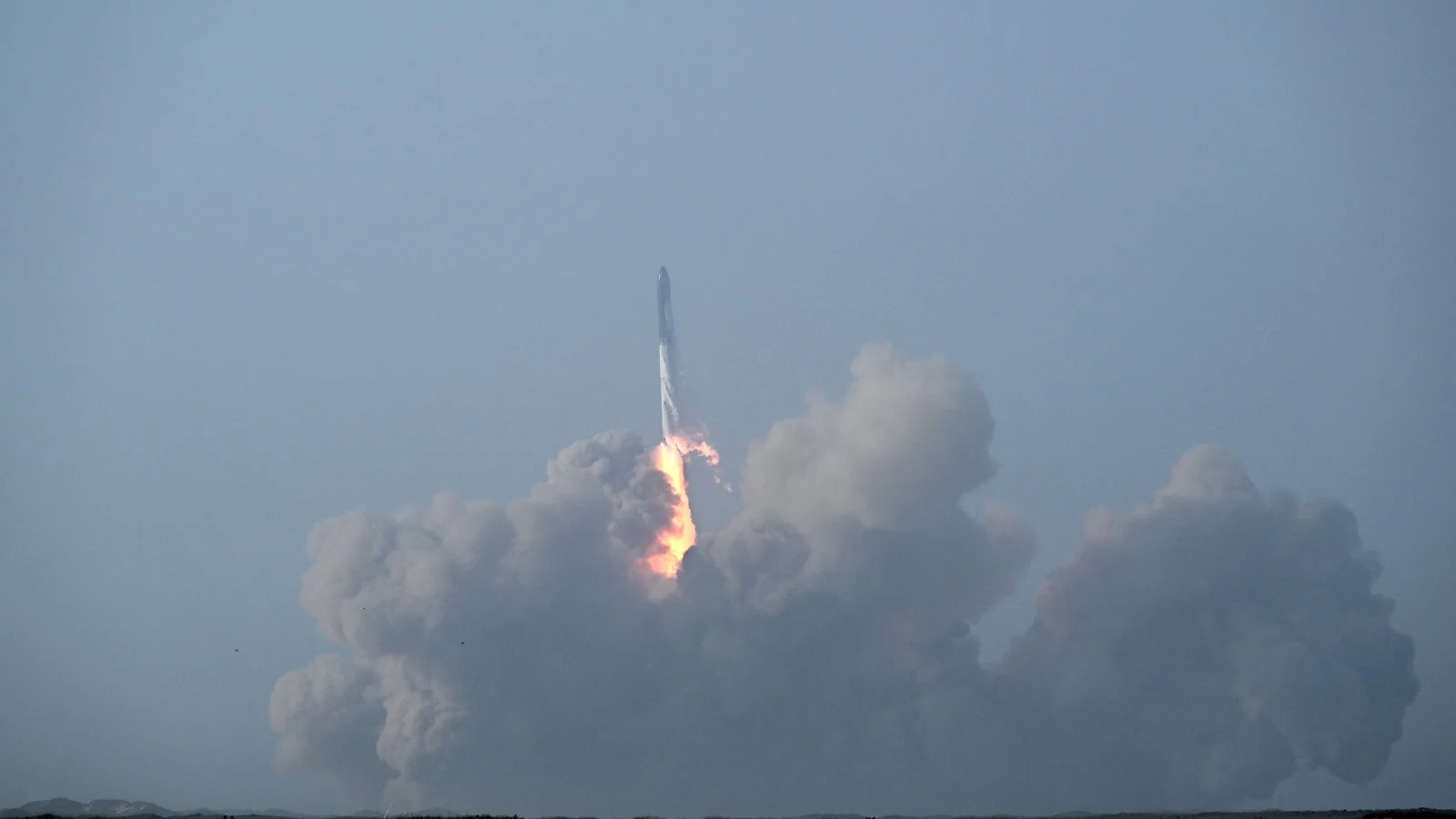
SpaceX’s Starship rocket, the most powerful rocket ever developed, exploded over the Gulf of Mexico three minutes into its first flight on April 20, 2023. Despite the fiery end result, SpaceX is calling the test launch a success. The rocket is designed to be fully reusable and is made of two different stages. The first stage, called Super Heavy, is a collection of 33 individual engines and provides more than twice the thrust of a Saturn V, the rocket that sent astronauts to the Moon in the 1960s and 1970s. The first stage is designed to get the rocket to about 40 miles above Earth. Once Super Heavy’s job is done, it is supposed to separate from the rest of the craft and land safely back on the surface to be used again. At that point, the second stage, called the Starship spacecraft, is supposed to ignite its own engines to carry the payload – whether people, satellites or anything else – into orbit. During the SpaceX livestream, the team stated that the primary goal of this mission was to get the rocket off the launch pad. Starship flew for more than three minutes, passing through what engineers call “max Q” – the moment at which a rocket experiences the most physical stress from acceleration and air resistance. According to SpaceX, a few things went wrong with the launch. First, multiple engines went out sometime before the point at which the Starship spacecraft and the Super Heavy rocket were supposed to separate from each other. The two stages were also unable to separate at the predetermined moment, and with the two stages stuck together, the rocket began to tumble end over end. It is still unclear what specifically caused this failure. SpaceX engineers will look to identify the specific cause of the problem so that they can fix it for the next test launch.


