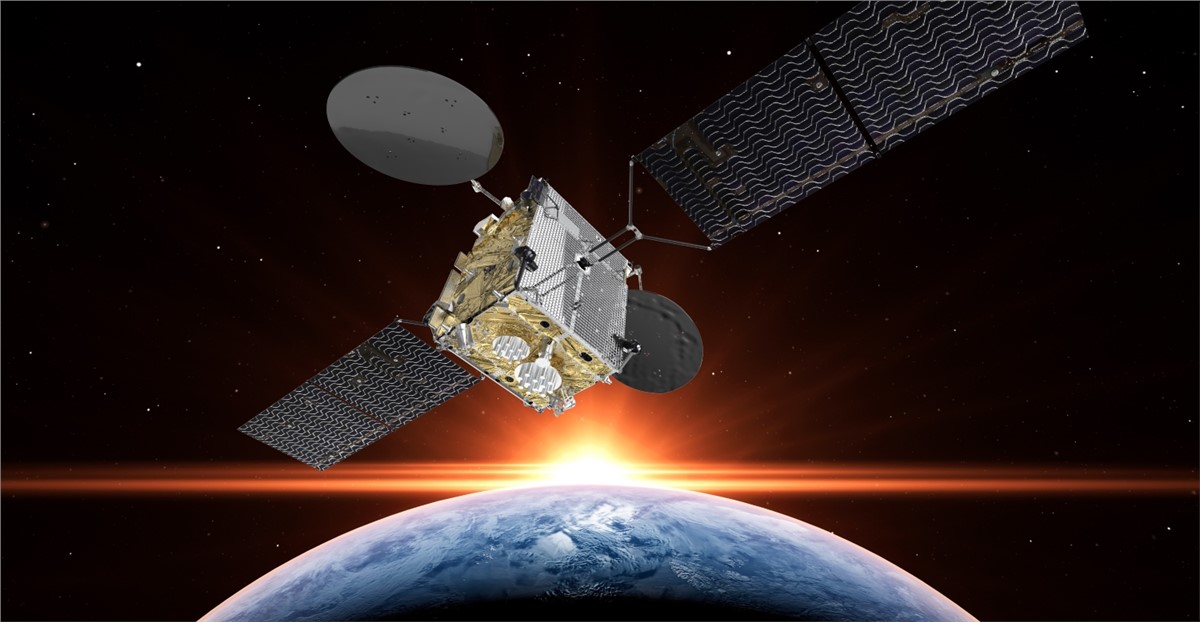
KT SAT Corporation Ltd. and Thales Alenia Space have announced that KOREASAT 6A will carry a satellite-based augmentation system (SBAS) payload to improve the continuity and availability of the Korea Augmentation Satellite System (KASS). KASS, which has been developed since 2016 by Thales Alenia Space jointly with the Aerospace Research Institute, is similar to the European Geostationary Navigation Overlay Service (EGNOS). It improves the positioning and navigation performance provided by global navigation satellite systems (GNSS) for a number of different sectors, especially aviation. KASS is expected to improve the GPS position error to 1.0-1.6 meter from the current 15-33 meter level in real time to ensure positioning reliability throughout the country.
“I would like to thank KT SAT for their renewed trust in Thales Alenia Space” said Hervé Derrey, CEO of Thales Alenia Space. “The embarkation of a SBAS payload built by Thales Alenia Space onboard KOREASAT 6A for the KASS system re-enforces our space navigation positioning and illustrates the success of European satellite navigation solutions.”
David Kyungmin Song, CEO of KT SAT said “Once KASS is successfully built up, we expect it will not only improve flight safety but also offer the most optimal air route as well. We are very pleased to play a pivotal role in the development of KASS under the partnership with Thales Alenia Space in manufacturing KOREASAT 6A. “
KOREASAT 6A will replace the current KORESAT 6 satellite and will deliver both fixed satellite service (FSS) and broadcasting satellite service (BSS) to South Korea. It will be positioned in geostationary orbit at 116° East. Built on Thales Alenia Space’s proven Spacebus 4000B2 platform, KOREASAT 6A will be fitted with six BSS transponders and twenty FSS transponders to cover all of South Korea. Slated for delivery in the fourth quarter of 2024, KOREASAT 6A will weigh about 3.5 metric tons at launch and offers a design life of 15 years.