

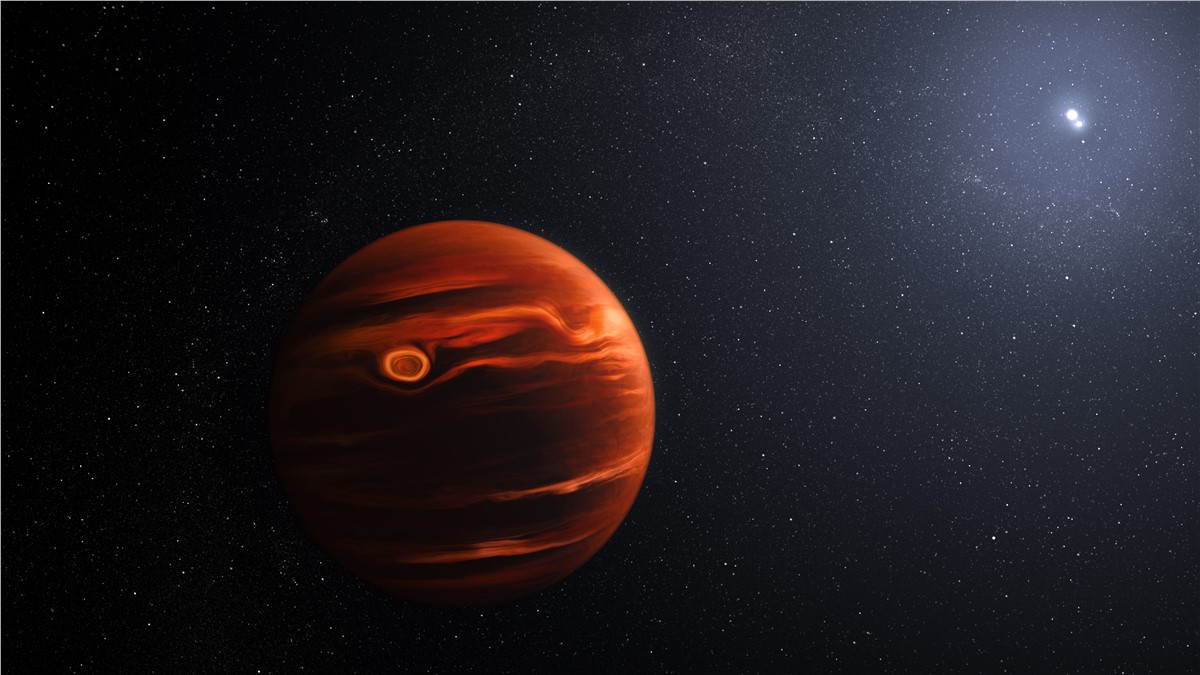
NASA’s James Webb Space Telescope has made a groundbreaking discovery, identifying silicate cloud features in a planet’s atmosphere. The planet, catalogued as VHS 1256 b, is located approximately 40 light-years away and orbits two stars over a 10,000-year period. The team, led by Brittany Miles of the University of Arizona, also detected water, methane, carbon monoxide and carbon dioxide on the planet. The planet’s atmosphere is constantly moving during its 22-hour day, leading to dramatic brightness changes and making it the most variable planetary-mass object known to date. The team believes that the discovery is just the beginning of a large-scale modelling effort to fit the telescope’s complex data.




 Copyright 2023 All rights reserved.