

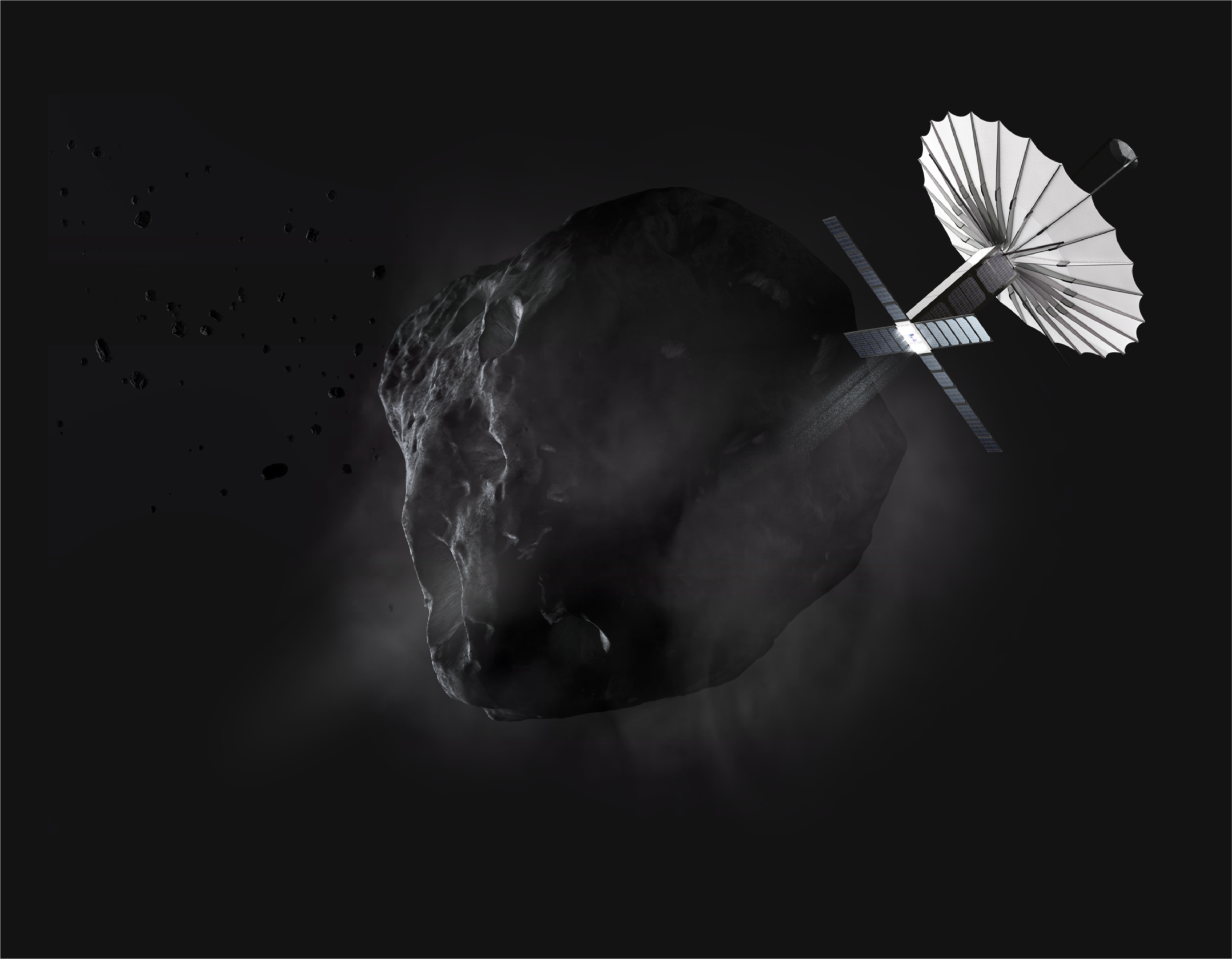
IENAI SPACE’s technology demonstrator for its ATHENA electrospray thruster will fly aboard Firefly’s Alpha Flight 2. Electrospray technology is a promising alternative to plasma-based technologies for Electric Propulsion systems.
Firefly’s Alpha Flight 2 “To the black” is scheduled to launch from Vandenberg Space Force Base in California on September 11th, 2022, at 00:00 CET. Firefly’s second attempt at reaching orbit will also carry a different kind of propulsion technology to orbit aboard two of the satellites stored inside the rocket: ATHENA, Europe’s first Electrospray thruster.


Mission patch for IENAI’s ATHENA demonstrator
Developed by Spanish startup IENAI SPACE, the technology demonstrators for their future commercial ATHENA thrusters are carried by two “GENESIS” pico-satellites, integrated by AMSAT Spain, with masses of just 400g each. The thrusters were qualified for flight in a test campaign during October of 2021 and they represent the first examples of electrospray technology in Europe to achieve said qualification status.
Electrospray technology is currently gaining momentum in the Electric Propulsion community; at this year’s International Electric Propulsion Conference (Boston, June 19-23 2022), the world’s largest gathering of Electric Propulsion experts, over 50 presentations were held to discuss and advance technical aspects of the technology. Two US companies: BUSEK and ACCION SYSTEMS are developing electrospray thrusters for commercial applications, but Europe has lagged behind in the development of this technology.

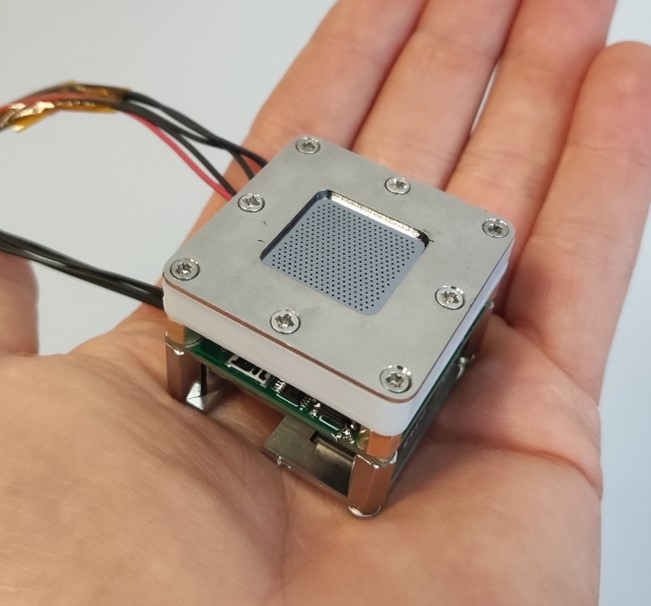
Electrosprays are a promising replacement for plasma-based technologies which have dominated the field since the first electric rocket, flown in 1964 aboard the SERT-1 mission. Legacy technologies such as Gridded Ion Thrusters or Hall Effect Thrusters (preferred commercially due to their higher thrust) ionize and expel gases such as Xenon or Krypton, or more recently, sublimated Iodine. Conversely, most modern Electrosprays employ ionic liquids (also known as molten salts) as propellants, which do not require ionization and can be accelerated to generate thrust by applying electric fields. Electrosprays are inherently more efficient than that of plasma-based thrusters, meaning that thrust does not to be sacrificed in exchange for fuel efficiency or vice versa. In fact, electrosprays can reach a ratio of thrust to input power similar to Hall Effect thrusters, making them a competitive technology for commercial applications. From a practical point of view, the technology is better suited for “lower powers” below the kilowatt range, and down to very-low powers of 10s of Watts, which makes them attractive to the smallsat community currently building LEO constellations as well as for nanosatellite integrators

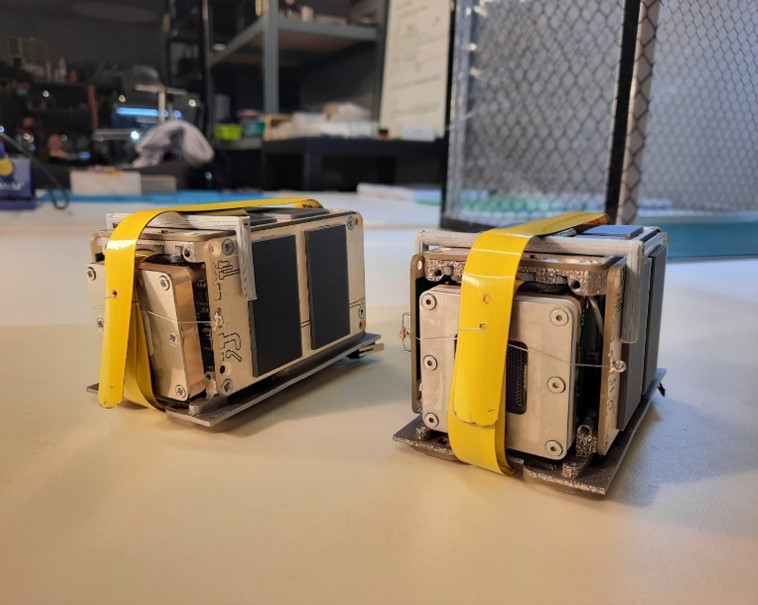
IENAI’s ATHENA demonstrator mission will last for several weeks and will be followed by a planned deorbiting of the GENESIS satellites. The mission’s goals are to demonstrate integration with the spacecraft and operation in space conditions of critical components to be used aboard future commercial thrusters: the microfabricated electrospray emitters, 3D printed propellant feeding substrates and some critical electronic components, as well as the thruster’s firmware. The thruster is a 2W version, capable of delivering 30uN of thrust; in the future, these thrusters will be able to increase the in-orbit lifetime of exceptionally small satellites, such as those leveraged by companies like Swarm (acquired by SpaceX last year) or Fossa Systems, providing drag compensation. The critical technologies demonstrated here will be later integrated on a high-maneuverability 20W-class ATHENA thruster, which will be demonstrated in orbit and will begin commercialization in 2023. A future 100W-class version is currently planned for 2024. IENAI SPACE is not only interested in commercial applications: space exploration has benefited greatly from Electric Propulsion in the recent years, in missions such as NASA’s DAWN or JAXA’s Hayabusa, and ATHENA thrusters could be used for future deep-space exploration missions.

The company’s CEO, Dr. Daniel Pérez Grande, welcomed the recent steady progress towards Firefly’s launch:
“This mission is a huge milestone for us, we’ve been waiting a long time to get to orbit! But it’s only the beginning: we’re big believers in the need for New Space to reach ‘statistically significant’ TRL9s so we have multiple IODs planned for next year with very exciting partners!”. Regarding the mission: “The technologies we’ll be demonstrating in the coming weeks are paving the way for Europe’s first commercial electrospray propulsion system, which will bring unrivaled versatility and efficiency to the European and worldwide in-space propulsion tool-box, potentially alleviating recent issues with the supply chain for both thrusters and propellants, as recently flagged by our colleagues at Phase Four.”
About the company
IENAI SPACE was founded in 2019 with the objective of developing new competitive products for the electric propulsion market, including both software and hardware tools; the company’s mission is “unlocking in-space mobility” and the team was voted the “most scalable startup” at the Space Propulsion Conference 2022. If you’d like to learn more about IENAI SPACE check out their website, register for the free GO™ mission analysis software, request a pilot study using their 360™ in-depth space mobility analysis tool, or follow them on LinkedIn
Courtesy of IENAI Space


