

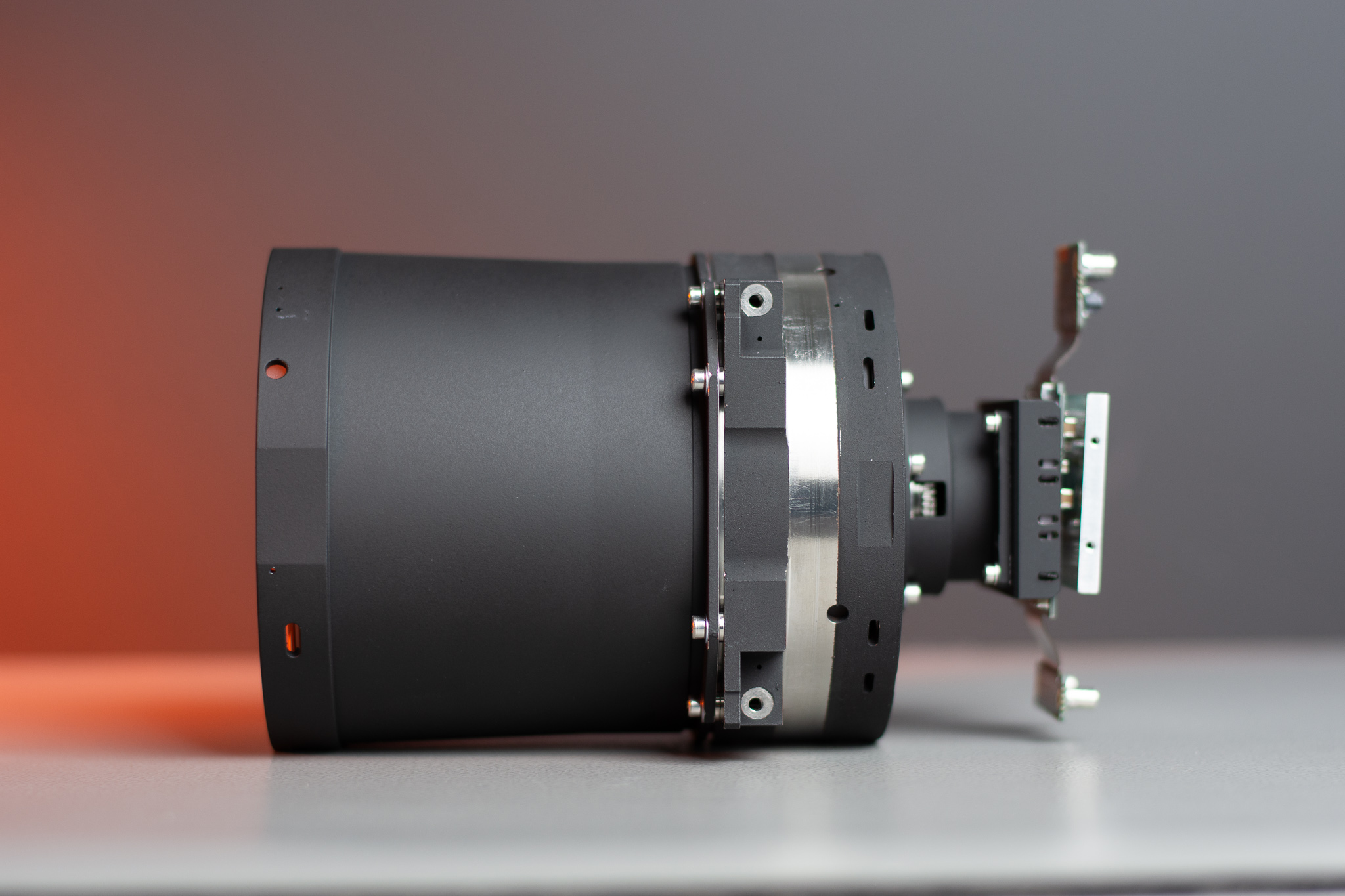

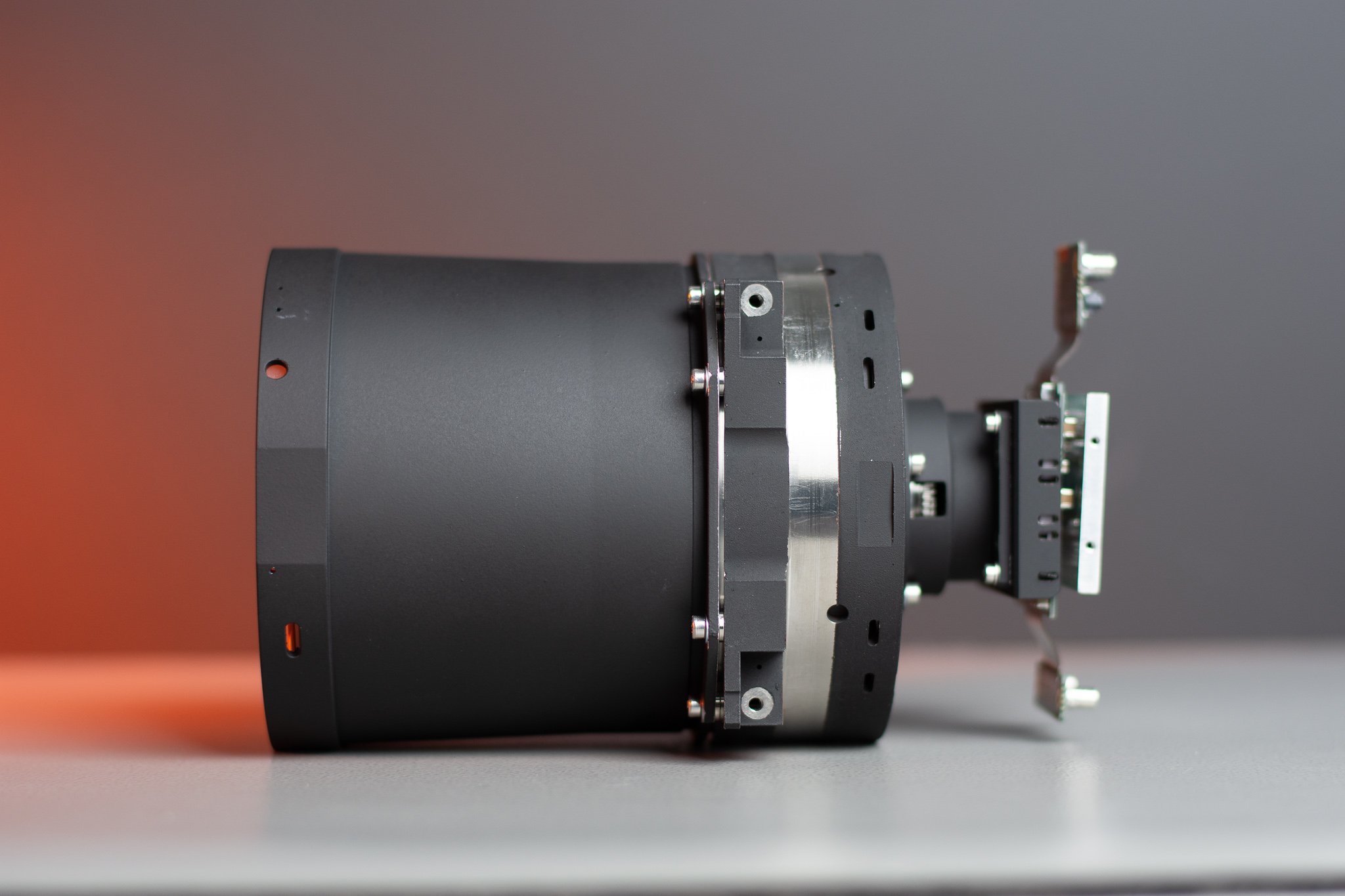
The performance of a Cubesat optical payload, as with any other electronic imaging system, is a function of its ability to capture photons and as many of them as possible during the integration time. Again, when looking at smartphone cameras, we are becoming used to extremely smooth 12 Mpixel or more images with depth, sharpness and image quality comparable to any high-end camera. One shouldn’t forget that these smartphone cameras can automatically adjust the integration time, depending on the light conditions, to obtain the best quality image. In many cases, the object is a few feet away in full sunlight, helping a lot to make your friend jealous.
On the other hand, when looking at a Cubesat optical payload orbiting about 500km above its target at a speed of about 7km/sec, you do have a little bit less than 700us to capture one image. So there is not much time to accumulate photons. And, when using a 5um pixel pitch sensor, you are limited to about 20k electrons well depth, making your system shot-noise limited. Therefore, if you can fill up the well with electrons during the integration time, the best SNR achievable is still less than 140. However, the reality is that you can only accumulate a few thousand electrons during this short integration time.
The trick is to increase the relative exposure time of the Cubesat optical payload, and this can either be done by slowing the relative ground speed by using forward motion compensation or by using time delay integration technologies. Of course, one can also address this bottleneck by increasing the relative aperture or decreasing the f-number, but this has volume, mass, cost and manufacturing complexity constraints.


