

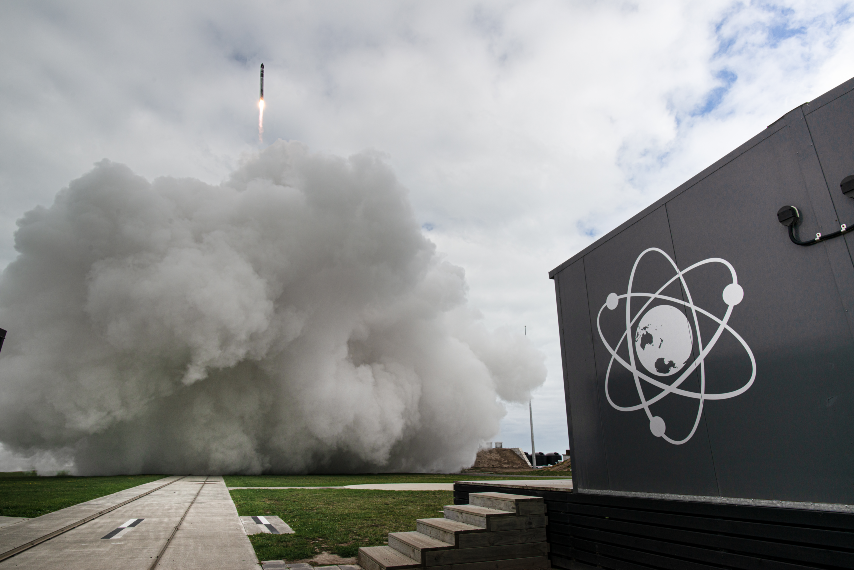
Adelaide-based satellite manufacturer Fleet Space Technologies has successfully launched its fifth nanosatellite today, Centauri 3. It was launched from New Zealand’s Launch Complex 1 at Mahia Peninsula aboard a Rocket Lab Electron launch vehicle “They Go Up So Fast”.
The 10kg nanosatellite entered its pre-planned orbit, 550km above the earth, on schedule, and was sending full telemetry data on its third pass. Over the next few days, the satellite will begin commissioning and engage in full operations.
“We’re very excited because Centauri 3 will demonstrate our Industrial Internet of Things (IIoT) capabilities by linking multiple remote sensors monitoring critical infrastructure such as remote mine sites, gas pipelines and rurally dispersed electricity pylons with central base stations, 24 hours a day,”
says Fleet Space CEO and co-founder Ms Flavia Tata Nardini.
“The Centauri 3 nanosatellite – our fifth commercial nanosatellite and our most advanced payload yet – will be joined by two more this year and a further 16 during 2022 and 2023,”
she adds.
These later satellites will have much greater signal throughput and their greater numbers will deliver a continuous service to customers worldwide.
Centauri 3 and the other nanosatellites make possible Fleet Space’s service to energy companies, utilities and mines worldwide. An IoT communications payload aboard each satellite, designed by Fleet Space, will connect thousands of sensors monitoring critical infrastructure across the world with their owners’ and managers’ base stations in real time, 24 hours a day. The full constellation of 140 satellites could generate a lifetime revenue of $1.82 billion, says Ms Tata Nardini.
The payload includes a highly innovative, lightweight beam-steering antenna, Artificial Intelligence-driven computer server and satellite modem, all designed in-house by Fleet Space. This will transform the ability of Australian industry to manage and control in real time remote assets.


