

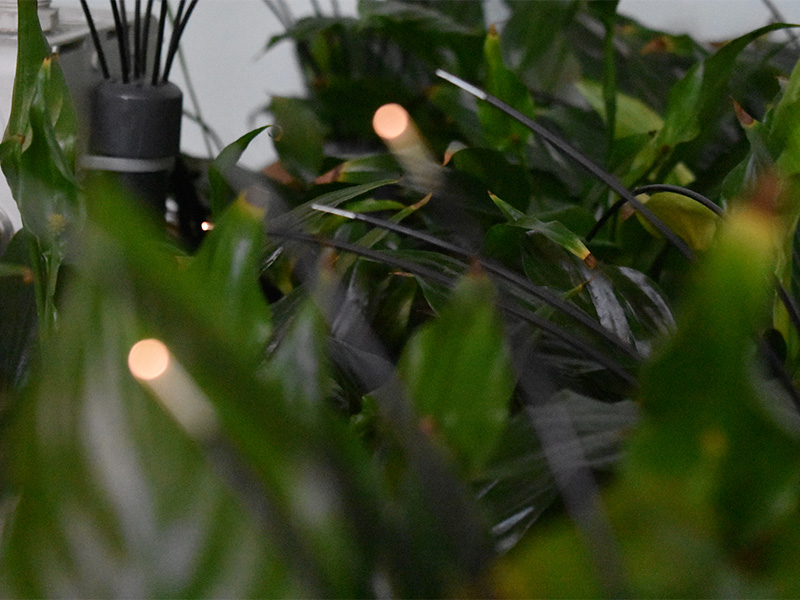

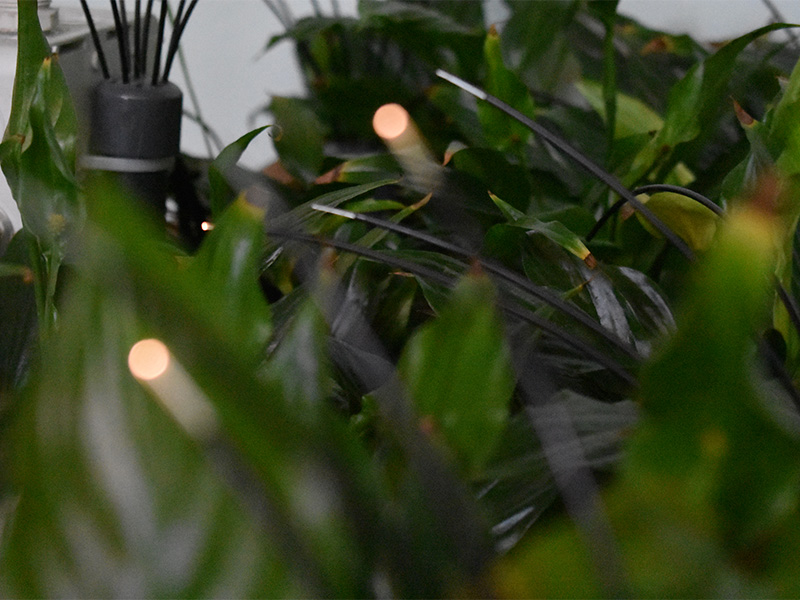
Harwell, Oxfordshire, UK, 14th January 2020 – The first-ever plant-powered sensor has successfully transmitted to a satellite in space. The pilot service, using plants as the energy source, has been developed by Plant-e and Lacuna Space. Because the sensor doesn’t need batteries, due to the internal storage in the system, it’ll reduce cost, maintenance requirements and environmental impact. As long as plants continue to grow, electricity will be produced.
Combining the innovative energy harvesting technology developed by Plant-e with the extremely power efficient devices from Lacuna Space, these devices are completely self-sustainable and operate independent from sunlight, day and night.
The Internet of Things (IoT) prototype device, developed by the two companies, uses the electricity generated by living plants to transmit LoRaWAN® messages about air humidity, soil moisture, temperature, cell voltage and electrode potential straight to Lacuna’s satellite. Future applications can be found in critical data gathering from agricultural land, rice fields or other aquatic environments without the need for any external energy sources. The pilot service is supported by the ARTES programme from the European Space Agency (ESA).


